
Capital Zone

Uncategorized

mortgage calculator uae

Mortgage Calculator in UAE. Check Your Loan Eligibility with Ease

One of the most crucial steps in your home-buying journey is understanding how much you can borrow. Capital Zone Mortgage is here to simplify your home financing with our advanced Dubai Mortgage Calculator. This user-friendly tool helps you estimate your mortgage eligibility, monthly payments, and overall affordability—even before approaching a lender. Why Use a Home Mortgage Calculator in UAE? Buying a home is a significant financial decision, and proper planning is essential. A mortgage calculator provides key insights to help you make informed choices. Here’s how it benefits you: Estimate Your Mortgage Amount  Determine how much you can borrow based on your income and expenses. Plan Monthly Repayments  Get a clear picture of your monthly financial commitments. Compare Different Mortgage Rates  See how various interest rates affect your total mortgage cost. Understand Mortgage Tenure Options  Choose a repayment plan that fits your financial goals. Budget Effectively  Factor in additional costs such as registration fees, processing fees, and property valuation charges. With Capital Zone Mortgage’s Dubai Mortgage Calculator, you can confidently move forward in your home-buying process. Understanding Mortgage Loans in Dubai Mortgage financing in Dubai is available for both UAE residents and non-residents, but eligibility and terms vary. Here’s what you need to know: For UAE Residents: For Non-Residents: If you’re unsure about your eligibility, consulting with a Capital Zone Mortgage Advisor can provide clarity. Our experts will guide you through the mortgage application process and secure the best financing options. How to Use the Dubai Mortgage Calculator? Using our Capital Zone Mortgage Calculator is quick and easy. This tool provides a realistic overview of your financial commitments, helping you make well-informed home financing decisions. Finding the Best Mortgage Advisor in Dubai Navigating the mortgage process can be overwhelming, with numerous lenders offering different rates and terms. A Capital Zone Mortgage Advisor can help simplify the process and secure the best mortgage deal. Our services include: Our experienced advisors ensure you get the most favorable mortgage terms suited to your financial situation. Using our Capital Zone Mortgage Calculator can help you factor in these expenses and plan accordingly. Why Choose Capital Zone Mortgage? At Capital Zone Mortgage, we are committed to making homeownership in the UAE a seamless experience. Here’s why we stand out:  Personalized consultations to find the best mortgage options.  Partnerships with leading banks for competitive interest rates. No hidden fees or complex terms. We streamline the application process, saving you time and effort. Start Your Home Buying Journey Today! Whether you’re a first-time buyer, an investor, or a non-resident looking for property financing, understanding your mortgage eligibility is the first step. Use Capital Zone’s Mortgage Calculator today and take the guesswork out of your mortgage planning. For expert mortgage advice and personalized assistance, contact Capital Zone Mortgage now, and let us help you secure the best home financing solution in Dubai! Related Articles: Your Guide to Mortgage for Non Residents in Dubai Property Valuation Fee in UAE

Mortgage Calculator in UAE. Check Your Loan Eligibility with Ease Read More »
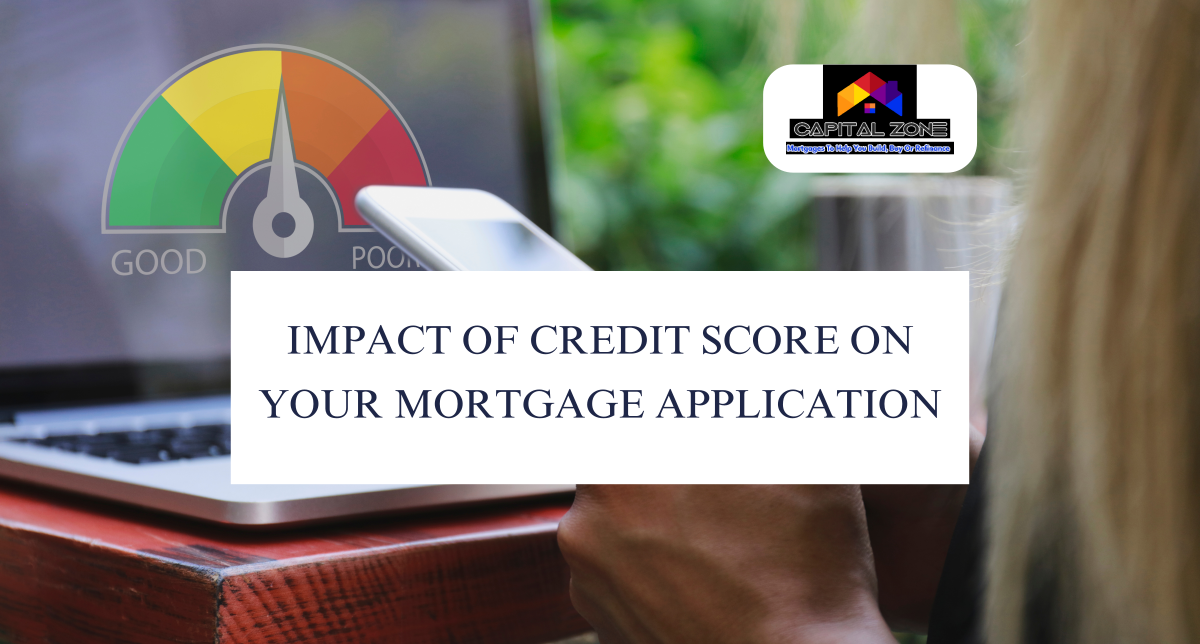
Powerful Impact of Credit Score on Your Mortgage Application

A credit score is a number between 300 and 900 that evaluates how trustworthy you are with credit. A higher score increases your chances of loan approval and qualifying for lower interest rates. Credit scores are determined using formulas and algorithms. While these methods can vary among credit bureaus, they generally assess similar factors including debt levels, payment history, types of credit accounts, credit utilization, and the length of your credit history. According to the Al Etihad Credit Bureau (AECB), a score above 680 is deemed favorable in Dubai. On the other hand, a score below 620 is considered unfavorable and it may be difficult obtaining a mortgage. Here is a breakdown to determine the status of your credit score. Above 731 : Excellent 680 – 730 : Good 620 – 679 : Fair 300 – 619 : Bad It’s crucial to understand that each lender sets its own standards for scores, and these criteria can vary based on the specific mortgage product you’re interested in. Therefore, it’s advisable to inquire directly with each lender about their credit score requirements when you’re considering different options. What impact does a credit score have on Mortgage application? When you apply for a mortgage, your credit score is really important. Lenders look at it to see how risky it might be to lend you money. If you have a good credit history, you’re more likely to get approved for a mortgage with a lower interest rate. But if your credit score is lower, it could be harder to get approved, and if you do get approved, you might have to pay higher interest rates. So, it’s really important to keep your credit in good shape if you want to get a good deal on a mortgage. How to check or access your credit score You can access your credit information from Al Etihad Credit Bureau by visiting their official website or using their mobile app. They offer three options: Credit Report and Score : AED 100 + VAT Credit Report : AED 80 + VAT Credit Score : AED 30 + VAT It’s recommended to request the full report with the score so you have comprehensive details about your credit history. How to Improve your Credit Score Here are some essential tips for managing your credit and improving your chances of securing a mortgage: 1. Review Your AECB Report Carefully: Always check your credit report from Al Etihad Credit Bureau (AECB) for any errors. If you find mistakes, contact the institution to correct them promptly. AECB is available to assist with any disputed records. 2. Make Timely Payments: Paying bills on time demonstrates financial responsibility to AECB, which strengthens your profile for mortgage applications. 3. Avoid Bounced Cheques: A bounced cheque can negatively impact your credit report for up to five years. It’s crucial to avoid these instances as they can affect your ability to secure mortgage approval. 4. Manage Credit Cards Wisely: Keeping credit card usage below the maximum limit and reducing overall credit card limits can improve your credit history. This, in turn, boosts your credit score and enhances your mortgage eligibility. 5. Understand Credit Score Impact: Your credit score is closely tied to your ability to secure a better mortgage. A good aecb credit score increases the likelihood of getting better mortgage terms, while a poor score can make approval more challenging and result in higher interest rates. By focusing on these steps to improve your credit history, you’ll increase your chances of securing a mortgage with favorable terms in Dubai. Understanding how credit scores influence mortgage approvals is crucial for managing your financial future effectively. Contact us today to learn more. Related Articles: Understanding Equity and Equity Release Understanding DBR and its Impact on Mortgage

Powerful Impact of Credit Score on Your Mortgage Application Read More »

Understanding Equity and Equity Release In UAE

In today’s evolving UAE financial landscape, homeowners are increasingly exploring equity release mortgages as a way to unlock liquidity and improve financial flexibility — without selling their property. What is Equity? Equity is the portion of your property that you truly own. It is calculated by subtracting your outstanding mortgage from your property’s current market value. Example: Property Value: AED 1,000,000 Outstanding Mortgage: AED 600,000 Equity: AED 400,000 In a market like the UAE, where property values have grown steadily, this equity can become a powerful financial asset. Why Equity Matters Your accumulated equity isn’t just value on paper — it can be used strategically to: Invest in additional properties Fund home renovations Cover education expenses Consolidate high-interest debt Support long-term financial planning What is Equity Release? Equity release allows you to access the value tied up in your property without selling it. In the UAE: Expat residents can typically access up to 80% of the property value UAE nationals can access up to 85% This depends on factors such as property type, income profile, and lender criteria. Key Benefits of Equity Release 1. Access to Capital Unlock significant funds for major expenses like: Buying a second property Renovations Investments 2. Financial Flexibility You can choose options that suit your goals, including: Mortgage refinancing (buy-out) Equity release loans Structured financing solutions This is especially useful when funding a down payment for another property, where requirements are higher. 3. Retain Property Ownership You continue to own your property while benefiting from its financial value. Things to Consider Before Opting Costs & Fees Be aware of: Interest rates (fixed or variable) Valuation fees (approx. AED 2,500–3,500) Arrangement fees Early settlement charges Typical rates: Fixed: ~3% to 5% Variable: EIBOR + margin Financial Planning Consider the long-term impact on: Cash flow Future investments Retirement planning Wealth transfer / inheritance Documents Required for Equity Release in Dubai Property Documents Title deed Building plan Registration documents Approval documents For Expats Passport copy Valid residence visa For Salaried Individuals Salary certificate Latest payslips Last 6 months’ bank statements For Self-Employed Individuals Trade license Memorandum of Association (MOA) Last 6 months’ bank statements Audited financials (minimum 2 years) How Capital Zone Can Help At Capital Zone, we simplify the mortgage process. Whether you are looking to: Release equity from your property Refinance your existing mortgage Invest in real estate Secure a resident or non-resident mortgage in Dubai Our team provides end-to-end guidance, from comparison to approval. Final Thought Your property is more than just a home — it’s a financial asset. An equity release mortgage allows you to put that asset to work, giving you access to liquidity while maintaining ownership. Get Expert Advice Contact Capital Zone today to explore the best mortgage solution tailored to your financial goals. No Complexity. No Confusion. Just expert mortgage guidance. Reasons Your Mortgage Application is Rejected Mortgage for Off-Plan Properties in the UAE  

Understanding Equity and Equity Release In UAE Read More »

Best Way to Get Loan Against Property in UAE.

What is a Loan Against Property? A Loan Against Property (LAP) is a secured loan where you use your residential or commercial property as collateral to obtain financing from a bank or lender. In simple terms, you unlock the financial value of your property without selling it. Depending on the lender and your financial profile, you can typically borrow up to 80% of your property’s value in the UAE. Because the loan is asset-backed, approval is generally easier compared to unsecured loans like personal loans. Why Do People Prefer a Loan Against Property in the UAE? A loan against property is widely used in the UAE due to its flexibility and lower interest rates. Here are the most common reasons borrowers choose LAP: Debt Consolidation Combine multiple debts into one loan with a single monthly payment — often at a lower interest rate. Financing Major Purchases Use the funds for large personal expenses such as: Buying a car Funding a wedding Medical expenses Investment Opportunities Leverage your property equity to invest in: Real estate Business ventures Financial instruments Business Expansion Entrepreneurs often use LAP for: Working capital Office expansion Equipment purchases Because rates are lower than business loans. Funding Education Cover tuition fees or overseas education costs without liquidating assets. Advantages of Loan Against Property Low Interest Rates Since the loan is secured, lenders offer lower rates than unsecured loans. Example:UAE Nationals may receive rates starting from 3% + 3-Month EIBOR (varies by bank). Longer Repayment Period Repayment tenures are extended — making EMIs more manageable and easing cash flow. Easier Approval Because the property reduces lender risk, approvals are faster and documentation is simpler. Features of Loans Against Property for UAE Nationals Loans against property come with borrower-friendly features: Minimal documentation Up to 80% Loan-to-Value (LTV) Fast approvals (as quick as 24 hours) Reduced EMIs Flexible repayment options Monthly installment structure Extended loan tenure Attractive interest rates Property insurance coverage No prepayment charges (lender dependent) Documents Required for Loan Against Property (UAE Nationals) While requirements vary by lender, standard documents include: Personal Documents Passport copy Emirates ID Proof of address Income Documents Salaried: Salary certificate Payslips 6 months bank statements Self-Employed: Trade license Memorandum of Association (MOA) Company financials 6 months bank statements Property Documents Title deed Property valuation Ownership proof You’ll also need to sign the loan agreement and pay applicable processing fees. How Capital Zone Can Help At Capital Zone, we specialize in structuring tailored Loan Against Property solutions across the UAE. Our services include: Bank comparison across UAE lenders Fast eligibility assessment Documentation support Interest rate negotiation End-to-end processing Whether you’re funding investments, expanding a business, or consolidating debt — our mortgage experts guide you at every step Related Articles Impact of Credit Score on Your Mortgage Application Understanding Equity and Equity Release  

Best Way to Get Loan Against Property in UAE. Read More »

Understanding DBR and Its Beneficial Impact on Mortgage

The Debt Burden Ratio (DBR) is a key figure that lenders evaluate when determining if a loan applicant qualifies for a loan. Although each bank or financial institution has its own specific criteria for eligibility, there are some common factors that all lenders consider, such as the debt-burden ratio and the applicant’s credit score. The Debt Burden Ratio measures how much your debts weigh on your income. Simply put, it compares your total debt, like loans, to your earnings, such as your salary. For businesses and corporations, there’s another important measure called the Debt-to-Equity ratio. Here’s an easy method for calculating the Debt Burden Ratio to help borrowers understand how banks or financial institutions might assess their loan applications. First, the borrower should list all their monthly recurring debts, including home loan payments, personal loan payments, car loan payments, 5% of their credit card limit, and any other monthly loan-related expenses. In simple terms, the Debt Burden Ratio represents the weight of debts relative to income, expressed as a percentage. Essentially, it compares total debt (loans) to total income (salary, business income, or other sources). DBR= Total Monthly Debt / Total Monthly Income Total Monthly Debt Payments: This includes all monthly debt obligations, such as mortgage payments, car loans, credit card minimum payments, and other outstanding loans. Total Monthly Income: This refers to the entire monthly earnings, which typically include salary, rental income, dividends, and any other sources of income. Why is Debt Burden Ratio Calculated? The Central Bank of the UAE recently set a maximum Debt Burden Ratio (DBR) of 50% for all individuals, including both UAE nationals and expatriates. For retirees, the Debt burden ratio is capped at 35%. This means that the total of your monthly EMIs, along with 5% of your credit card limit, should not exceed 50% of your monthly salary. Why is Debt Burden Calculation Important? If an applicant has a monthly income of AED 10,000 but faces an EMI of AED 7,000. This raises the concern of how they can manage their expenses if such a large portion of their income is tied up in loan repayments. Situations like this can lead to significant issues for banks. As a result, they implemented stricter guidelines and closely scrutinized applicants’ Debt Burden Ratios. Currently, applicants for personal loans in the UAE must provide a comprehensive set of documents, including a salary certificate, bank statements, and any additional information requested by the bank. These documents help banks evaluate the borrower’s ability to repay the loan, which influences their lending decisions. The documentation process in UAE banks is becoming increasingly thorough. They calculate the Debt Burden Ratio using these records, and if the ratio is 50% or lower, the loan is approved; if it exceeds that, the application is typically denied. To qualify for a loan in the UAE, your Debt Burden Ratio (DBR) should not exceed 50%. In the past, the upper limit was 65%, which led many people to take out multiple loans, raising their cost of living and causing banks to face losses and difficulties in collecting payments. Currently, the ratio is set at 50%. Ideally, the debt-to-burden balance should be zero, but in practice, it’s best to keep it as low as possible. How DBR Impacts Your Mortgage Application Mortgage Eligibility: Lenders use your Debt Burden Ratio (DBR) to evaluate how well you can afford mortgage payments in relation to your income. Generally, a DBR below a specific threshold is preferred, with the maximum allowed in the UAE being 50%. A lower Debt burden ratio suggests you have more disposable income available for mortgage payments, making you a more appealing candidate for loan approval. Loan Approval: Your Debt burden ratio is crucial in determining whether you qualify for a mortgage and the maximum amount you can borrow. Lenders have set limits for various loan programs, and exceeding these limits could lead to a loan denial or require additional documentation to justify your income and repayment ability. Interest Rate: While debt burden ratio doesn’t directly affect your mortgage interest rate, it indirectly shapes how lenders view your creditworthiness. Borrowers with lower DBR ratios are often seen as less risky, which may enable them to secure lower interest rates according to the lender’s pricing policies, resulting in reduced monthly payments throughout the loan term. Down Payment Requirement: In some instances, lenders might ask for larger down payments or impose stricter terms for borrowers with higher DBRs, even if they fall within the 50% limit set by the UAE Central Bank. A bigger down payment can help mitigate the perceived risk associated with a higher DBR, potentially enhancing your chances of loan approval. How to reduce your DBRHere are some useful tips for keeping your Debt Burden Ratio (DBR) low: 1. Make Timely Payments: Always pay your monthly interest on time and focus on gradually reducing your loan balance.2. Consider Debt Consolidation: Look into debt consolidation services to combine your debts into lower-interest options.3. Increase Your Income: Seek opportunities to boost your monthly earnings.4. Eliminate Outstanding Debts: Aim to pay off any existing debts as quickly as possible. These strategies can help lower your debt burden ratio while also maintaining a healthy credit score. Contact us today to get the best mortgage options available for you! Related Articles How to Increase your Mortgage Pre-Approval Amount Mortgage for Off-plan Properties in UAE

Understanding DBR and Its Beneficial Impact on Mortgage Read More »

good Mortgage Broker

the 5 Questions a Good Mortgage Broker Can Answer

1. Should You Apply for a Mortgage Before or After Finding a House? Many people think that applying for a mortgage is something to tackle later in the home-buying process, but that’s actually not the best approach. We recommend starting your mortgage search right at the beginning of your journey to find the perfect home. Here’s why:First, figuring out the details of your potential purchase costs and monthly payments will give you a clear understanding of what properties are within your budget. This clarity will help you focus your search on homes that you can realistically afford. Second, having a pre-approved mortgage is a significant advantage when you’re looking at houses. It positions you as a serious buyer when you start making offers and enhances your negotiating power. Lastly, if you complete your mortgage search beforehand, you’ll be ready to make a quick offer when you find the home you love. With all this information at your fingertips, you can avoid the pressure of making a rushed mortgage decision out of fear that someone else might grab your dream property! 2. What Are the Eligibility Criteria for Obtaining a Mortgage in Dubai? If you’re looking to buy a home in Dubai with a mortgage, you need to meet the following criteria to qualify: – The borrower must be a UAE national or a resident. Some banks also provide a mortgage for non-residents– The borrower’s age must be at least 21 and no older than 70.– A stable source of income and a good credit score are required.– For salaried individuals, the monthly income should be a minimum of AED 10,000, while self-employed individuals must earn at least AED 25,000.– The mortgage payments must be completed before retirement. 3. Should You Choose a Mortgage from Your Bank or an Independent Mortgage Advisor? When it comes to selecting a mortgage, it’s important to explore all your options. That’s why we suggest partnering with a trusted mortgage advisor, like Mortgage Finder, instead of simply going with your bank’s offering. Here’s why:– Streamlined Research: They can save you the trouble of comparing different lenders’ offers.– Tailored Options: They’ll present various choices and help you find the mortgage product that best fits your needs.– Paperwork Management: They handle all the necessary paperwork and oversee the process on your behalf.– Time Savings: This approach can save you a significant amount of time. 4. How Can I Determine Which Homes I Can Afford? Understanding what homes you can afford is crucial when considering buying property in the UAE. Having this clarity can save you significant time in your search and help you avoid taking on a mortgage that could lead to financial strain. To identify which homes fit your budget, it’s important to break down the various costs associated with buying and owning property in the UAE. Here are the key expenses to consider: – Down Payment– Monthly Mortgage Payments– Purchasing Costs Next, take a close look at your financial situation to determine what you can realistically afford. Consider the following factors that will influence your budget:– Monthly Income– Average Monthly Expenses– Available Cash (liquid assets like savings or checking account funds)– Existing Liabilities (such as personal or car loans) Start by assessing what down payment and purchase costs you can manage based on your savings. To do this, you should:– Review your monthly income, expenses, and liabilities.– Decide on a comfortable monthly mortgage payment for yourself.– Keep a buffer in mind for fluctuating monthly expenses.– Avoid allocating all your savings toward a property, as you may need funds for unexpected expense. 5. What Is Stress Rate? A stress rate is a theoretical interest rate that banks use to evaluate whether a borrower can manage mortgage payments if interest rates rise.Here are some key points about the stress rate:– It is usually set higher than the current mortgage rate.– It serves as a tool to assess your capacity to handle financial pressure.– It helps ensure that borrowers won’t face financial difficulties if interest rates go up in the future. If you’re looking for additional information, contact Capital Zone and our expert mortgage advisors can help you navigate the process of securing the perfect mortgage for your specific requirements. Whether you are looking for a residential mortgage or a non resident mortgage dubai. Related Articles1. Partner with a Mortgage Specialist in Dubai- Achieve your goals2. What type of off-plan property is best for investment in Dubai? Stay tuned for more fascinating insights on UAE Mortgage trends:Website | Linkedin | Instagram | Facebook 

the 5 Questions a Good Mortgage Broker Can Answer Read More »