Capital Zone

best mortgage brokers in uae

current home loan interest rates in uae

What is the Current Home Loan Interest Rate in UAE?

When it comes to buying a property in the UAE, one of the most important factors to consider is the home loan interest rate. Whether you’re a first-time buyer or an experienced investor, understanding how these rates work can help you make smarter financial decisions — and ultimately save thousands of dirhams over the term of your mortgage. In this article, we’ll break down what influences the home loan interest rate, the average rates you can expect in 2025, and how Capital Zone can guide you to the lowest rates available. What is the Current Home Loan Interest Rate in UAE? The home loan interest rate varies depending on several factors, including the lender, borrower profile, loan amount, and repayment term. As of 2025, typical mortgage rates start from 3.75%. Fixed-rate options are commonly available for 3 to 5 years, while variable-rate options depend on the Emirates Interbank Offered Rate (EIBOR). Banks typically offer two types of rates: Choosing between these depends on your financial strategy and risk tolerance. But whichever you choose, knowing the best available home loan interest rate is essential. Factors That Influence the Home Loan Interest Rate in UAE Several elements affect how much interest you’ll pay on your mortgage: Understanding these variables is key to securing the most favorable home loan interest rate in UAE. How Capital Zone Helps You Get the Best Rates At Capital Zone, we specialize in finding the lowest home loan interest rate tailored to your needs. Here’s how we can help: With Capital Zone, you’re not just getting a loan — you’re getting the best possible home loan interest rate in UAE with expert support. Why Now is a Great Time to Lock in a Home Loan Interest Rate in UAE With interest rates remaining relatively low in 2025 and a range of financing options available, this is one of the best times in recent years to consider a mortgage. Property values in key UAE markets like Dubai and Abu Dhabi are rising steadily, making it even more important to lock in a competitive home loan interest rate before rates potentially climb. Final Thoughts The home loan interest rate can make a significant difference in your total repayment amount over the life of the loan. That’s why it’s crucial to understand the market, compare options, and partner with experts who have your best interest in mind. Let Capital Zone simplify the process for you. We do the heavy lifting so you can focus on what truly matters — owning your dream home. Looking for the best home loan interest rate in UAE? Let Capital Zone secure the right mortgage deal for you. Contact us today for a free consultation and pre-approval check. Disclaimer: Mortgage rates and terms are subject to change based on lender policies and market conditions. Always consult a financial advisor for personalized advice. Stay tuned for more fascinating insights: Website | Linkedin | Instagram | Facebook Related Articles: Mortgage for Offplan Property in UAE: What You Need to Know Can Expats Get a Mortgage in Dubai?

What is the Current Home Loan Interest Rate in UAE? Read More »
How your credit score affects your mortgage in uae

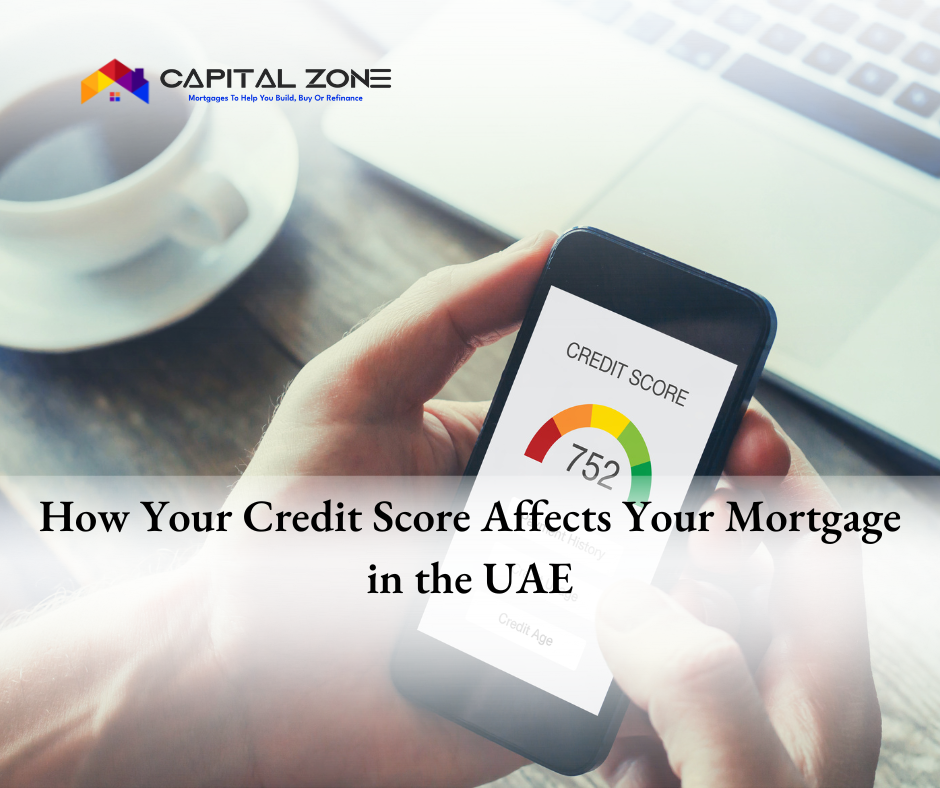
How Your Credit Score Affects Your Mortgage in the UAE

When planning to buy a home, one of the first things lenders consider is your credit score. Understanding how your credit score affects your mortgage in the UAE can make the difference between approval and rejection — or even between a great rate and a costly one. In this article, we’ll explain how your credit score affects your mortgage, what credit score range you should aim for, and how Capital Zone can guide you through the entire mortgage journey. What is a Credit Score in the UAE? In the UAE, your credit score is issued by the Al Etihad Credit Bureau (AECB). It ranges from 300 to 900, with a higher score representing better creditworthiness. Banks and financial institutions use this number to assess how likely you are to repay your home loan. How Your Credit Score Affects Your Mortgage Let’s explore in detail how your credit score affects your mortgage prospects: 1. Loan Approval Chances The most direct way how your credit score affects your mortgage is whether the bank will approve it at all. A low score (below 620) signals risk to lenders, often leading to rejections. A higher score (700+) indicates reliability and increases approval odds. 2. Interest Rate Offered Banks in the UAE offer better interest rates to applicants with strong credit profiles. This is another major way how your credit score affects your mortgage — even a 0.5% difference can save you thousands of dirhams over the loan term. 3. Loan Amount and Terms Lenders may restrict the amount you can borrow or offer shorter repayment terms if your score is weak. That’s how your credit score affects your mortgage in terms of flexibility and affordability. 4. Down Payment Requirements A lower score may also result in a higher down payment requirement, reducing your overall loan-to-value (LTV) ratio — another area how your credit score affects your mortgage experience. 5. Additional Documentation If your score isn’t ideal, banks may ask for more documentation to justify your financial stability. This is a subtle but significant way how your credit score affects your mortgage process, making it more complex and time-consuming. What’s Considered a Good Credit Score in the UAE? Most UAE banks prefer a minimum credit score of 650 for mortgage approval. However, this varies from bank to bank. How to Improve Your Credit Score Before Applying If you’re worried about how your credit score affects your mortgage, consider these tips to boost it: Even a small increase in your score can significantly improve how your credit score affects your mortgage outcomes. How Capital Zone Can Help At Capital Zone, we specialize in simplifying the mortgage process in the UAE. Whether you’re concerned about how your credit score affects your mortgage, or you’re simply unsure where to start, our expert advisors will: We take the guesswork out of how your credit score affects your mortgage and guide you every step of the way. Final Thoughts Understanding how your credit score affects your mortgage is essential in today’s competitive UAE property market. From loan approval to interest rates and terms, your credit score plays a major role in shaping your home-buying journey. If you’re ready to take the next step and want professional help to navigate the mortgage process, get in touch with Capital Zone — your trusted mortgage partner in the UAE. Disclaimer: Mortgage rates and terms are subject to change based on lender policies and market conditions. Always consult a financial advisor for personalized advice. Stay tuned for more fascinating insights: Website | Linkedin | Instagram | Facebook Related Articles: Mortgage for Offplan Property in UAE: What You Need to Know Can Expats Get a Mortgage in Dubai?

How Your Credit Score Affects Your Mortgage in the UAE Read More »

mortgage for offplan property in uae

Mortgage for Offplan Property in UAE: What You Need to Know

Investing in property in the UAE has become increasingly popular, especially among expats and international investors. One of the most attractive options is purchasing off-plan properties — developments that are still under construction but offer competitive prices and flexible payment plans. But can you get a mortgage for offplan property in UAE? The answer is yes, under the right conditions. In this article, we’ll explain how a mortgage for offplan property in UAE works, what you need to qualify, and how Capital Zone can guide you every step of the way. What is an Offplan Property? An off-plan property is a real estate asset that is sold before it’s completed. Buyers can purchase directly from the developer at a lower price compared to ready properties. The benefits include: But while the investment is promising, many buyers are unsure if they can secure a mortgage for offplan property in UAE — especially since the property isn’t ready yet. Can You Get a Mortgage for Offplan Property in UAE? Yes, but there are a few important considerations: 1. Approved Developers & Projects Banks will only offer a mortgage for offplan property in UAE if the developer and project are on their approved list. This reduces the risk of project delays or defaults. 2. Developer & Bank Tie-ups Some developers have direct agreements with banks, making it easier for buyers to secure a mortgage for offplan property in UAE. 3. Loan-to-Value (LTV) Ratio For off-plan purchases, banks typically finance up to 50% of the property value during the construction phase. Once the property is completed, you may be eligible to refinance with a higher LTV. 4. Property Completion Requirement Most banks will only disburse the mortgage once a certain percentage (usually 50%) of the construction is complete. Until then, the buyer covers early-stage payments. Key Documents Required To apply for a mortgage for offplan property in UAE, you will generally need: Advantages of Offplan Mortgage Financing That said, navigating a mortgage for offplan property in UAE can be complex without expert advice. How Capital Zone Can Help You Secure an Offplan Mortgage At Capital Zone, we specialize in helping both residents and non-residents obtain a mortgage for offplan property in UAE. Here’s how we make the process smooth and stress-free: When it comes to a mortgage for offplan property in UAE, Capital Zone ensures you get the best rates, terms, and a hassle-free experience. Final Thoughts Buying an off-plan property is a smart investment, and yes — you can secure a mortgage for offplan property. With the right guidance, proper documentation, and a trusted mortgage broker like Capital Zone, you can finance your dream home or investment property with confidence. If you’re planning to buy off-plan and need expert advice, Capital Zone is here to help. Reach out today for a free consultation and discover your mortgage options. Disclaimer: Mortgage rates and terms are subject to change based on lender policies and market conditions. Always consult a financial advisor for personalized advice. Stay tuned for more fascinating insights: Website | Linkedin | Instagram | Facebook Related Articles: Can Expats Get a Mortgage in Dubai? Islamic Home Finance vs Conventional Mortgage in Dubai: What You Need to Know

Mortgage for Offplan Property in UAE: What You Need to Know Read More »

can expats get mortgage in uae

Can Expats Get a Mortgage in Dubai?

Dubai has become one of the most sought-after destinations for expats looking to invest in real estate. With its luxurious lifestyle, tax-free income, and rapidly growing property market, it’s no wonder more and more foreigners are asking the question: Can expats get a mortgage in Dubai? The simple answer is yes—but the process requires the right guidance, proper documentation, and a deep understanding of local lending criteria. Mortgage for Expats in Dubai: What You Need to Know Yes, expats can get a mortgage in Dubai. The UAE government allows non-residents and expatriates to purchase property in designated freehold areas. Banks and financial institutions in the UAE offer various mortgage options tailored specifically for expats. However, getting a mortgage for expats in Dubai involves meeting specific eligibility criteria, including: Each lender has its own policies, which is why working with a knowledgeable mortgage broker Dubai based can significantly streamline the process. Benefits of Getting a Mortgage for Expats in Dubai Opting for a mortgage for expats in Dubai rather than buying outright with cash provides multiple advantages: With property prices expected to rise steadily, securing a mortgage for expats in Dubai now could result in strong capital appreciation in the future. Why Use a Mortgage Broker in Dubai? Navigating the home loan market in a foreign country can be overwhelming. A professional mortgage broker Dubai understands the nuances of the local real estate and banking industry, making it easier for expats to secure the best mortgage deal. Here’s what a mortgage broker Dubai can do for you: Why Expats Should Choose Capital Zone Capital Zone is one of the leading names when it comes to securing a mortgage for expats in Dubai. Here’s why expats trust Capital Zone with their home financing journey: When it comes to securing a mortgage for expats in Dubai, Capital Zone eliminates the guesswork and simplifies the path to homeownership. Conclusion To answer the big question—absolutely, they can. And with expert support from a reliable mortgage broker Dubai, the process becomes much more manageable. Whether you’re looking to buy your first home, invest in a rental property, or refinance an existing mortgage, choosing the right partner is key. Capital Zone is here to make your journey seamless, secure, and successful. If you’re exploring a mortgage for expats in Dubai, reach out to Capital Zone today and take the first confident step toward owning property in one of the world’s most dynamic cities. Disclaimer: Mortgage rates and terms are subject to change based on lender policies and market conditions. Always consult a financial advisor for personalized advice. Stay tuned for more fascinating insights: Website | Linkedin | Instagram | Facebook Related Articles: Islamic Home Finance vs Conventional Mortgage in Dubai: What You Need to Know How Much Can I Borrow for a Mortgage in Dubai?

Can Expats Get a Mortgage in Dubai? Read More »

islamic vs conventional mortgage in dubai

Islamic Home Finance vs Conventional Mortgage in Dubai: What You Need to Know

When it comes to buying property in the UAE, one of the biggest decisions you’ll face is choosing between Islamic vs Conventional Mortgage in UAE. Both options serve the same purpose—helping you finance your dream home—but they differ significantly in structure, ethics, and how interest is handled. Understanding the difference between Islamic vs Conventional Mortgage in UAE can help you make the right financial decision based on your values, beliefs, and long-term goals. What Is a Conventional Mortgage? A conventional mortgage in the UAE is a standard loan offered by banks and financial institutions. You borrow a fixed amount from the lender and repay it over a specific term with added interest. The bank makes money by charging you interest on the amount borrowed. Key features of a conventional mortgage: What Is Islamic Home Finance? An Islamic home finance solution follows Sharia-compliant principles. Instead of charging interest, the bank buys the property and sells it to you at a profit (Murabaha), or leases it to you with the option to purchase later (Ijara). This model avoids interest-based transactions. Key features of Islamic finance: Islamic vs Conventional Mortgage in UAE: The Key Differences Understanding the core differences between Islamic vs Conventional Mortgage in UAE is essential for making the right financial decision. One of the most fundamental differences lies in how interest is handled. In Islamic finance, interest is not applicable as it is prohibited under Shariah law. Instead, banks earn profit through approved structures such as Murabaha (cost-plus financing) or Ijara (leasing). In contrast, conventional mortgages involve charging interest on the loan amount, which is the bank’s primary source of income. Ownership also varies between the two. With Islamic finance, the bank either owns the property and gradually transfers ownership to the buyer or co-owns it with the buyer until full repayment is made. In a conventional mortgage, the buyer takes immediate ownership of the property while repaying the loan over time. Risk-sharing is more balanced in Islamic finance, with banks and buyers sharing responsibility, especially in lease-based structures. In conventional mortgages, the borrower typically bears most of the risk, including any market downturns or property devaluation. When it comes to flexibility, conventional mortgages tend to offer a wider range of products, lenders, and variable or fixed rate options. Islamic finance, on the other hand, operates through structured and ethically governed contracts that may offer less flexibility but align closely with Shariah principles. Finally, the approval process differs. Islamic mortgages undergo an additional layer of Shariah compliance checks alongside standard credit evaluations. Conventional mortgages are approved based purely on credit score, income, and repayment ability. Understanding these key aspects of Islamic vs Conventional Mortgage in UAE can help buyers choose the option that best suits their financial situation and personal values. Which One Should You Choose? The decision between Islamic vs Conventional Mortgage in UAE depends on your personal, financial, and ethical preferences. If you’re looking for a Sharia-compliant, interest-free option, Islamic finance may be the way to go. On the other hand, conventional mortgages might offer slightly lower rates or more flexible repayment terms. A trusted mortgage broker Dubai like Capital Zone can help you weigh your options by comparing offers from both Islamic and conventional lenders. How Capital Zone Can Help At Capital Zone, we specialize in helping clients navigate the complex world of property finance. Whether you’re looking into Islamic vs Conventional Mortgage in UAE, or just trying to understand your eligibility, our expert team is here to simplify the process. Here’s how we help: As a seasoned mortgage broker Dubai residents trust, Capital Zone ensures you get the best deal—whether you’re leaning toward an Islamic structure or a conventional option. Final Thoughts When choosing between Islamic vs Conventional Mortgage in UAE, it’s essential to look beyond just numbers. Ethics, long-term flexibility, and personal beliefs all play a role. With the right guidance from a mortgage broker Dubai like Capital Zone, you can make an informed decision with confidence and clarity. If you’re still unsure about Islamic vs Conventional Mortgage in UAE, reach out to Capital Zone today. We’ll walk you through every option available and help you secure a home loan that aligns with your goals. Disclaimer: Mortgage rates and terms are subject to change based on lender policies and market conditions. Always consult a financial advisor for personalized advice. Stay tuned for more fascinating insights: Website | Linkedin | Instagram | Facebook Related Articles: How Much Can I Borrow for a Mortgage in Dubai? Dubai Non-Resident Mortgage Guide 2025

Islamic Home Finance vs Conventional Mortgage in Dubai: What You Need to Know Read More »

Minimum Salary for a Home Loan in UAE

Minimum Salary for a Home Loan in UAE: Everything You Need to Know

Buying a home in the UAE is a dream for many residents, but understanding the financial requirements is crucial—starting with the minimum salary for a home loan in UAE. Whether you’re a salaried employee or self-employed, lenders assess your income carefully to determine your eligibility for a mortgage.  What Is the Minimum Salary for a Home Loan in UAE? The minimum salary for a home loan in UAE generally starts from AED 10,000 per month. However, this threshold can vary based on the bank, loan amount, and loan-to-value (LTV) ratio. For example: The higher your salary, the better your chances of securing a larger mortgage with more favorable interest rates. Loan Amounts, Down Payment & Interest Rates When applying for a mortgage, your monthly income determines how much you can borrow. Here’s a typical breakdown: So, if your salary is AED 15,000, your total monthly debt obligations—including your mortgage—cannot exceed AED 7,500. How Minimum Salary Affects Loan Approval Banks assess risk based on your income stability and monthly expenses. If you just meet the minimum salary for a home loan in UAE, you might face: This is why working with a mortgage expert can be a game-changer. How Capital Zone Can Help You At Capital Zone, we understand that navigating the home loan market in the UAE can be overwhelming—especially if you’re unsure whether your income meets the minimum salary for a home loan in UAE. Here’s how we support you: Who Can Apply for a Mortgage? To qualify for a mortgage based on the minimum salary for a home loan, you typically need to: Final Thoughts Understanding the minimum salary for a home loan in UAE is the first step toward owning property in Dubai, Abu Dhabi, or any other emirate. While AED 10,000/month is the general threshold, each case is unique—and that’s where Capital Zone comes in. We make your property goals a reality, no matter where you stand financially. Connect with us today to find out if you meet the minimum salary for a home loan in UAE, and let us guide you to the best mortgage options in the market. Ready to take the next step?Get in touch with Capital Zone to check your eligibility for a UAE home loan—even if you just meet the minimum salary for a home loan in UAE. Disclaimer: Mortgage rates and terms are subject to change based on lender policies and market conditions. Always consult a financial advisor for personalized advice. Stay tuned for more fascinating insights: Website | Linkedin | Instagram | Facebook Related Articles: How the 10-Year UAE Golden Visa Can Help You Get Better Mortgage Terms Is Islamic Home Finance Right for You in the UAE?

Minimum Salary for a Home Loan in UAE: Everything You Need to Know Read More »