
Capital Zone

mortgage broker

Investing in UAE properties

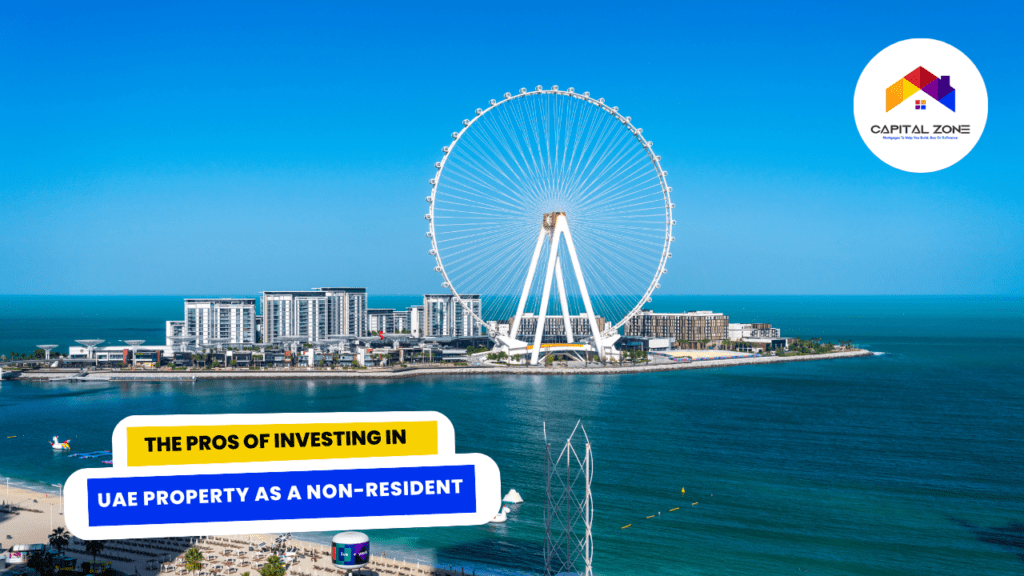
Exploring the Pros of Investing in UAE Properties as a Non-Resident

Investing in real estate is an excellent way to diversify one’s investment portfolio and secure long-term financial stability. The United Arab Emirates (UAE) has emerged as a prime destination for property investments, attracting investors from around the world. This blog aims to highlight the advantages of investing in UAE properties as a non-resident. Robust Economy and Political Stability: The UAE boasts a stable and prosperous economy, driven by sectors such as finance, tourism, real estate, and trade. The country’s proactive government policies, favorable business environment, and low crime rate contribute to its political stability. These factors create a secure investment climate for non-residents. Lucrative Rental Yields: One of the key advantages of investing in UAE properties is the potential for high rental yields. Popular locations like Dubai and Abu Dhabi offer attractive rental income due to the steady influx of expatriates and tourists. With a thriving rental market, investors can generate consistent cash flow, making UAE properties an appealing choice. Tax Benefits: As a non-resident investor, you can take advantage of the UAE’s tax structure, which provides several benefits. The country has no personal income tax or capital gains tax on property investments. This tax-friendly environment allows investors to maximize their returns and retain a higher portion of their rental income or capital gains. Growing Real Estate Market: The UAE’s real estate market has experienced significant growth over the years. While there have been periods of fluctuations, the overall trajectory has been upward. The country’s ambitious development projects, such as Expo 2020 and various infrastructure initiatives, contribute to the market’s resilience and long-term potential for capital appreciation. Favorable Legal Framework: The UAE has implemented investor-friendly laws and regulations to encourage foreign investment in its real estate sector. Non-resident investors can own freehold property in designated areas, which provides full ownership rights. Additionally, the government has introduced measures to protect investors, ensuring a transparent and secure investment environment. Cultural Diversity and Quality of Life: The UAE’s diverse and cosmopolitan society makes it an attractive destination for individuals from all walks of life. As an investor, you have the opportunity to enjoy a high standard of living and access world-class amenities, including luxury shopping malls, entertainment venues, and excellent healthcare facilities. The UAE’s commitment to innovation and sustainable development further enhances its appeal. Strategic Location and Connectivity: Situated at the crossroads of Europe, Asia, and Africa, the UAE offers exceptional connectivity and accessibility. With state-of-the-art airports and world-class infrastructure, the country serves as a major hub for international business and travel. This strategic location not only facilitates investment opportunities but also ensures ease of travel and connectivity for non-resident investors. Conclusion: Investing in UAE properties as a non-resident presents numerous compelling reasons for international investors to consider this thriving market. One of the most attractive features is the high rental yields that Dubai offers, often outperforming other global markets. The demand for both short-term vacation rentals and long-term residential leases continues to drive rental income opportunities, making it a lucrative option for property owners. Additionally, the UAE’s tax-free income policy is a significant advantage for foreign investors. There are no property taxes, capital gains taxes, or inheritance taxes, which means investors can enjoy higher returns compared to many other countries where tax burdens can significantly reduce profits. This favorable tax environment contributes to the UAE’s reputation as a global hub for investment. Long-term capital appreciation is another key benefit. Over the years, Dubai’s real estate market has experienced substantial growth, driven by rapid urban development, a booming tourism sector, and continued infrastructural improvements. Properties in prime locations such as Downtown Dubai, Dubai Marina, and Palm Jumeirah, among others, have seen consistent value appreciation, making them attractive assets for long-term investors looking to capitalize on Dubai’s continued expansion. One of the main enablers for non-residents to invest in the UAE property market is the availability of mortgage for non-residents Dubai. Traditionally, international investors might have faced barriers when seeking financing abroad. However, Dubai’s banking sector has made it relatively easy for non-residents to obtain property loans. These mortgages come with competitive interest rates, often lower than those in other international markets, and flexible repayment terms. Typically, non-residents can secure financing for up to 60-70% of the property value, allowing them to leverage their investment. Related Articles:1. Partner with a Mortgage Specialist in Dubai- Achieve your goals2. Reasons your Mortgage Application is Rejected Stay tuned for more fascinating insights on UAE Mortgage trends:Website | Linkedin | Instagram | Facebook 

Exploring the Pros of Investing in UAE Properties as a Non-Resident Read More »

Dubai tenant and landlord

Dubai tenant and landlord rights in 2023

Whether you’re a tenant or a landlord, it’s important to know your rights when renting a property. RERA, Dubai’s real estate regulatory agency, have created laws including No. 26 of 2007, No. 33 of 2008, and Decree No. 2 of 2011, which outline the roles and responsibilities of tenants and landlords.  To save you time, this handy guide will give you a great introduction to tenant and landlord rights in Dubai in 2023, including:    Tenant frequently asked questions How many cheques are usually needed? In Dubai, rent is usually paid in the form of cheques. The number of cheques will be agreed upon between you and the landlord when negotiating the rental. The total rent is then divided by the number of cheques and paid at intervals throughout the rental.  The number of cheques typically varies between one and six payments. Landlords typically prefer a lower number of cheques, but your real estate agent will be able to help you negotiate this based upon your circumstances. If paying by one cheque, the total rent will be paid via one payment at the start of the rental. If you were to pay by four cheques, you would give the landlord four different cheques. One for the first day of the tenancy, and three post-dated cheques at 3-month intervals during the tenancy.   The Dubai Land Department recently announced plans for tenants to be able to pay via online banking rather than cheques in future, which would move Dubai more in line with many developed economies around the globe.  How do you negotiate a better rate? In general, paying via one cheque (a one-off payment for the full amount) will get you the best rental rate. Landlords will often charge a higher rent to tenants wishing to pay with more cheques, so paying with fewer cheques or making a larger initial payment should get you a better deal.  Does the landlord have a right to ask for a security deposit?  In Dubai, landlords can require tenants to pay a security deposit at the beginning of a tenancy agreement. This is almost always the case, so you should expect this whenever searching for a rental property.  The security deposit is typically 5% of the annual rent for an unfurnished property, or 10% of the annual rent for a furnished property.  As long as the property is returned to the landlord in good condition at the end of the tenancy, the security deposit should be returned partially or in full to the tenant upon vacating the premises.  Who pays for repairs if something within the property breaks during my tenancy?  When renting a property, the chances are you’ll experience something breaking or requiring maintenance during your tenancy. In general, maintenance and repairs are the responsibility of the property owner. However, it is very common for tenancy contracts to state that the landlord will only cover major repairs that cost more than a certain amount. For example, the landlord may only cover the cost of repairs if they exceed AED 1,000, with any less expensive repairs being paid for by the tenant. You should therefore be careful to check this in your tenancy contract prior to signing for a rental property. Are there any clauses I can use if I need to break my contract?  Whether there are any clauses you can use to break your contract early will depend on the specific terms and conditions of your tenancy contract. You should therefore check if your contract includes an exit or early termination clause. Without this, your landlord might ask for compensation. Some contracts include break clauses where you pay your landlord a certain amount as a penalty for terminating early. If the option to end the contract early is important to you, then you should discuss this with your agent prior to agreeing to a tenancy, to ensure it is negotiated and included in the tenancy agreement.  Can my landlord evict me before my tenancy agreement is completed?  No, your landlord cannot evict you prior to your tenancy agreement being completed. Your landlord can only ask you to vacate through a 12-month written notice via registered mail or notary public.  My landlord wants to increase my rent. How much can they increase it legally? For a comprehensive overview, check out our post:  Can my landlord increase my rent in Dubai in 2023? But in short, yes the landlord can increase your rent. But, this can only happen when your tenancy renews (not at any time during the tenancy) and the landlord must give you 90 days’ written notice prior to the renewal date. The landlord can also only increase the rent by a certain amount, which is dictated by the DLD’s Rental Index.  I am unable to use the communal areas of my building because my landlord has not paid the service charges. What can I do about this? if your landlord has failed to pay the service charges, then the first step is to contact them to discuss the problem. In the event that they fail to make the payment, you may be able to seek legal recourse. The Dubai Rental Disputes Settlement Centre can be contacted at 600 555 556. It seems that all the rental properties I am interested in are going very quickly. When I put a deposit on a property, how can I be sure nobody will undercut me 24 hours later?  The Dubai real estate market moves very quickly, so it’s very normal to enquire about properties only to find that they have already been rented out. Once you find a property that you wish to rent and have negotiated the tenancy, the agent will collect a deposit from you. As soon as your deposit has been received, the property should be reserved for you and removed from the market. However, to be absolutely certain that the rental does not fall through, you should sign a tenancy contract as soon as possible with the landlord to

Dubai tenant and landlord rights in 2023 Read More »

Tips for international dubai

Tips for international/overseas investors in Dubai

Due to the global pandemic, Dubai’s property market, like every other market on the globe, faced a setback in 2020. However, following a brief hiatus, it is back on track and aiming for a swift and powerful comeback. This significant rebound is mostly due to new rules and regulations, as well as the return of foreign investors to Dubai as a result of the restart of international flights. As property prices and demand rise, so do the interests of both domestic and foreign real estate investors. This has led to an influx of investors from many countries looking for investment possibilities in Dubai. If you wish to diversify your assets, Dubai’s real estate market offers lucrative opportunities. You can generate a high income in the shortest amount of time without incurring additional expenses to establish your office in a foreign country. Following international real estate investors’ interest in making foreign investments, the government of Dubai introduced freehold property legislation in 2007. This law allows foreigners to acquire Dubai homes with ownership rights. For those worried about investing overseas, Dubai’s Real Estate Regulatory Authority has taken several steps to make Dubai’s real estate sector transparent so that inexperienced investors can take advantage of the following simple tips to make the most of their real estate investments in Dubai. Identify your budget This is quite crucial. When you choose your budget, you are analyzing and deciding on your purchasing power. This will give you the widest possible target range. It is necessary to conduct extensive market research in order to determine what kinds of properties are available for purchase. Home mortgage loans are available to real estate investors in Dubai. This certainly has several advantages that assist in lessening payments over time. Having said that, it is crucial to know that the Central Bank of the UAE has established mortgage ceiling limitations for ex-pats. Purpose of investment  Some people acquire homes with the intention of reselling them, while others want to rent them out to generate a passive income. In both circumstances, the criteria for selecting a property are different. For example, if you intend to resell it later, you can choose from off-plan properties in Dubai, which are offered at reduced prices. The disadvantage here is that you will have to wait for the development to be completed before you can earn an ROI. There are several factors to consider when purchasing property to rent out. The property should be located in a desirable neighbourhood for tenants. This implies that it should be well-connected, conveniently accessible, and provide basic amenities to its inhabitants. The objective of the investment heavily influences geographical selection. However, the budget also plays a role here. Choose the right area There are a few neighbourhoods, notably those located outside of the city centre, where you may find reasonably priced houses. They are more suitable if you want to resell them at a higher price. Similarly, some places might provide greater outcomes for people looking to rent out their homes. The key here is to pick a good neighbourhood. It should not be hurried. Rather, take your time and learn about the advantages and disadvantages of the locations you’ve chosen. Take into account future market trends that have the potential to affect the area as well. Deal with certified brokerages  Working with a real estate agent to look at houses for sale in Dubai has various advantages. However, only work with certified and licensed brokers or real estate agents. When dealing directly with the seller or property dealer, the same recommendations should be followed. Make certain that the individual with whom you are dealing is authorized to sell the property. You should confirm this before visiting the place in question. Despite the fact that the Dubai property market is regarded as secure for real estate investors, it is nevertheless advised to follow this advice in order to reduce the danger of being scammed. Do your research You cannot thrive in the real estate market, especially in a metropolitan city like Dubai, unless you conduct a thorough study. It is an important part of being a successful real estate investor. The quantity of study necessary for area selection has previously been emphasized. However, there are some more aspects to consider before entering the market. For example, you should be aware of the types of property that are suited for real estate investors. And knowing this necessitates much investigation. Similarly, recognizing market trends necessitates extensive study on the part of the investor prior to making a purchase. Related Articles:1. What to include in your snagging list?2. The Ultimate Guide to Living a Lavish Luxury Lifestyle in Dubai Stay tuned for more fascinating insights on UAE Mortgage trends:Website | Linkedin | Instagram | Facebook 

Tips for international/overseas investors in Dubai Read More »

off-plan property

What type of off-plan property is best for investment in Dubai?

Dubai is one of the world’s fastest-growing cities, with a thriving real estate market that fuels the growth of individuals and companies from all over the world. If you want to invest in off-plan property in Dubai, you must first understand the different types of properties available. In this blog article, we’ll look at the greatest types of off-plan property to buy in Dubai. Apartments When people think of off-plan property investment, they think of apartments. More affordable than villas and townhouses, apartments are some of the most popular investments in Dubai. Not only could you rent it out and receive a good return on investment (ROI), but if you study the market right and choose the best property, you could score something with a great capital appreciation. Some projects that are highly in demand will sell out much faster, and that’s because they offer geat locations, good prices, and often, a flexible payment plan.  Villas and Townhouses Another type of off-plan property investment is villas and townhouses in Dubai. Those are a little different than apartments in terms of return on investment, where they target families rather than bachelors and couples. The return on investment will depend on things such as location, amenities, and more, but it will also depend on the plot, location of the unit, and internal layouts. Some nationalities prefer open kitchens to closed ones, some prefer corner units to middle ones. Villas are better for capital appreciation, and their value often increases exponentially after purchase. Unless the villa or townhouse is in bad shape, you will most likely be able to sell it for a good profit. Mixed-use Developments Mixed-use properties and lands are real estate developments that combine two or more different uses, such as residential, commercial, office, retail, and/or hospitality spaces. They are designed to create a sense of community and provide a one-stop shop for residents and visitors, offering the convenience of living, working, and shopping in one place. Mixed-use properties are becoming increasingly popular in urban areas, where space is limited and demand for convenience and accessibility is high. These properties offer investors the potential for high rental yields and capital appreciation in prime locations. They are highly attractive to investors looking for a diversified investment portfolio that can generate steady income and long-term growth. In conclusion, Dubai’s real estate market offers a wide range of off-plan properties that cater to different investor profiles. The best type of off-plan property for investment in Dubai will depend on the investor’s financial goals, risk tolerance, and market research. It’s crucial to conduct thorough due diligence and seek professional advice before making any investment decisions. Investing in off-plan property in Dubai can be highly lucrative, but it requires careful consideration and planning. Related Articles:1. How to quickly sell your property in Dubai2. Home Loan vs. Loan Against Property: All you need to know Stay tuned for more fascinating insights on UAE Mortgage trends:Website | Linkedin | Instagram | Facebook 

What type of off-plan property is best for investment in Dubai? Read More »

Home Loan vs. Loan Against Property

Home Loan vs. Loan Against Property: All you need to know

Individuals who are looking for a loan to finance a specific goal or emergency have many options to choose from. However, with many loan products on the market, it has become confusing for people to decide which one is best suited to their requirements. When it comes to buying property, most people consider taking a home loan because it offers the longest repayment tenure and lower interest rates than other loans. On the other hand, a loan against property is also a popular choice because it offers higher loan amounts and can be used for multiple purposes. To help you make a better decision, here is a detailed comparison of home loans and loans against property: Home Loan v/s Loan Against Property When it comes to taking a loan, it boils down to these choices. Both have their own set of pros and cons, and it is essential to understand the difference between a home loan and a loan against property. Things You Need to Know before Applying for a Loan Against Property 6 Common Myths about Loan Against Property (LAP) Here’s a list of entirely untrue myths but deemed to be true by the masses: Myth #1 – A loan against property can only be pledged with residential property. Myth #2 – A borrower cannot use a pledged property as collateral. Myth #3 – You may borrow the full value of your property using this loan. Myth #4 – The interest rate on loans against property is always higher. Myth #5 – Only a high-income borrower can apply for LAP. Myth #6 – A LAP can only be used for business purposes. Things You Need to know before Applying for a Home loan? Applying for a home loan can seem daunting, but it doesn’t have to be. You can apply for a home loan through a broker or directly from a financial institution. Moreover, the things you must know are:- 5 Common Myths about Home loans Just like loans against property, there are many wrongful tales being spread out about home loans. The ones listed below are untrue: Myth #1- Mortgage interest rates are at an all-time high Myth #2- A borrower cannot use a pledged property as collateral. Myth #3- Only first-time home buyers can get a good mortgage deal Myth #4- The interest rate on home loans is always higher than on other types of loans. Myth #5- You can’t get a mortgage if you’re self-employed. You can also read: How to Qualify for a Mortgage in the UAE? How Capital Zone can Help You with Your Loan? Capital Zone is a leading mortgage firm that provides the best mortgage services to its customers. We have a team of highly qualified and experienced mortgage consultants who work closely with our clients to find them the best deals. We offer a wide range of mortgage products like home loans, refinance loans, commercial loans, etc., that cater to the specific needs of our clients. We are known for our fast, efficient services and the lowest interest rates. We have a track record of providing the best deals to our clients. Capital Zone is a name you can trust when it comes to getting the best mortgage deals. Conclusion: Home loans and Loan Against Property are two of the most common types of loans. While both loans have benefits, it is important to understand which is right for you. If you are still unsure after reading this article, please do not hesitate to contact us, and we will be happy to help you find the best loan for your needs.

Home Loan vs. Loan Against Property: All you need to know Read More »

sell your property in Dubai

How to quickly sell your property in Dubai

With a vast and dynamic real estate market, finding the right buyer and getting the best deal for your Dubai property can be daunting. But, there are several tips that can help you sell your property quickly. In this post, we explore some of the best ways to sell a property in Dubai quickly, whether you’re a first-time seller or an experienced investor.  1 – Get an accurate valuation of your property Once you have made the decision to sell your property, the first step is to invite two or three leading agencies to value your property. This should always be an in-person appraisal of the property so that the agent can assess the location, condition and any upgrades to the property. The agent should also demonstrate knowledge and experience working within your community, and have comparable evidence of similar properties that have recently sold and the price they were sold for. 2- Choose the right agent for you When the agents visit you to conduct the valuation, ask them how they plan to achieve a quick sale whilst still getting the best price for you. You will be able to tell which agent is the most active from their comparable evidence and also by checking their online presence. It is important for you to be able to trust the agent you are working with as you will be working closely together to sell the property. 3 – Prepare your property for sale Buyers will typically view lots of properties before making the decision to commit to a purchase. This means that it’s crucial to ensure your property stands out from the crowd and sticks. This can often be done very easily without spending too much money, by making a few quick changes. If the property is vacant make sure it has been deep cleaned and freshly painted before the marketing begins. If you are living in the property make sure it is tidy, smells fresh and has lots of natural light pouring in. 4 – Prepare your documents to avoid delays You should speak to your chosen agent to confirm what documents you will require, and have them ready to go to ensure a quick sale. If you have made any significant upgrades to the property, you need to make sure you have all the correct NOC’s (no objection certificates) in place from the relevant authorities. These will be required to complete the transaction and if they are not in place, it can cause long delays. If you don’t have a mortgage against the property, make sure you have the original title deed in your possession, a copy will not suffice when completing the transfer. If you have lost the original title deed, the process to replace it will take about one month.   5 – Agree on a marketing and pricing strategy with your agent If you are looking to sell your property in Dubai quickly, then it is very important that the launch to the market is done in the correct way. Professional photos are an absolute must, as well as a video and a well-written property description. Your agent should know the amount that similar properties have sold for recently, and the listing price for your property should be at that price or a maximum of 5% higher to allow for negotiations. Before your property is marketed online, the agent should have a ready bank of potential buyers who have registered their details and whose requirements match your property. They should all be contacted and invited to a pre-launch open house event.  6 – Prepare for viewings Agents work very hard to sell properties, often working outside of business hours. They often carry out viewings in the early morning, late evening and over the weekend. In order to make a quick sale, it is important that your property is available to view at ease during different times of the day and that it is always looking presentable, clean and tidy. The front of your property including the entrance areas or front garden should also be presentable and inviting. The agent should arrive slightly earlier than the client and make sure that all of the curtains or blinds are open and the lights are turned on to create a welcoming environment from the moment the client arrives. 7 – Remember the market knows best Even when looking at comparable evidence, valuing a property is not an exact science and the market will always dictate what the true value of the property is. The value can change based on many different factors. If after 10 days on the market, you have not received an offer for your property or agreed on a sale, you should work with your agent to reduce the price to a level that will attract more interest. As a guide, this should be a reduction of at least 5%. The alternative to reducing the price would be to spend some money on upgrading the property. However, since you are aiming to make a quick sale, this may not be appropriate as the upgrades will prolong the time needed to complete the sale. 8 – Consider your offers When an offer is made on the property there are a few elements that need to be considered. The most important is obviously the price being offered. However, a close second is the buyer’s buying position. Are they buying with cash? If so, is the cash available now, or do they need to raise it? If they are buying with a mortgage, have they already started the mortgage process and have they been pre-approved? When time is of the essence, it is important for you to fully understand the buyer’s time scales for completion.   9 – Enlist a professional conveyancing company Once your agent has completed his main objective of securing a buyer for your property, the next vital step is to appoint a professional conveyancing service to manage the process from signing the contracts

How to quickly sell your property in Dubai Read More »